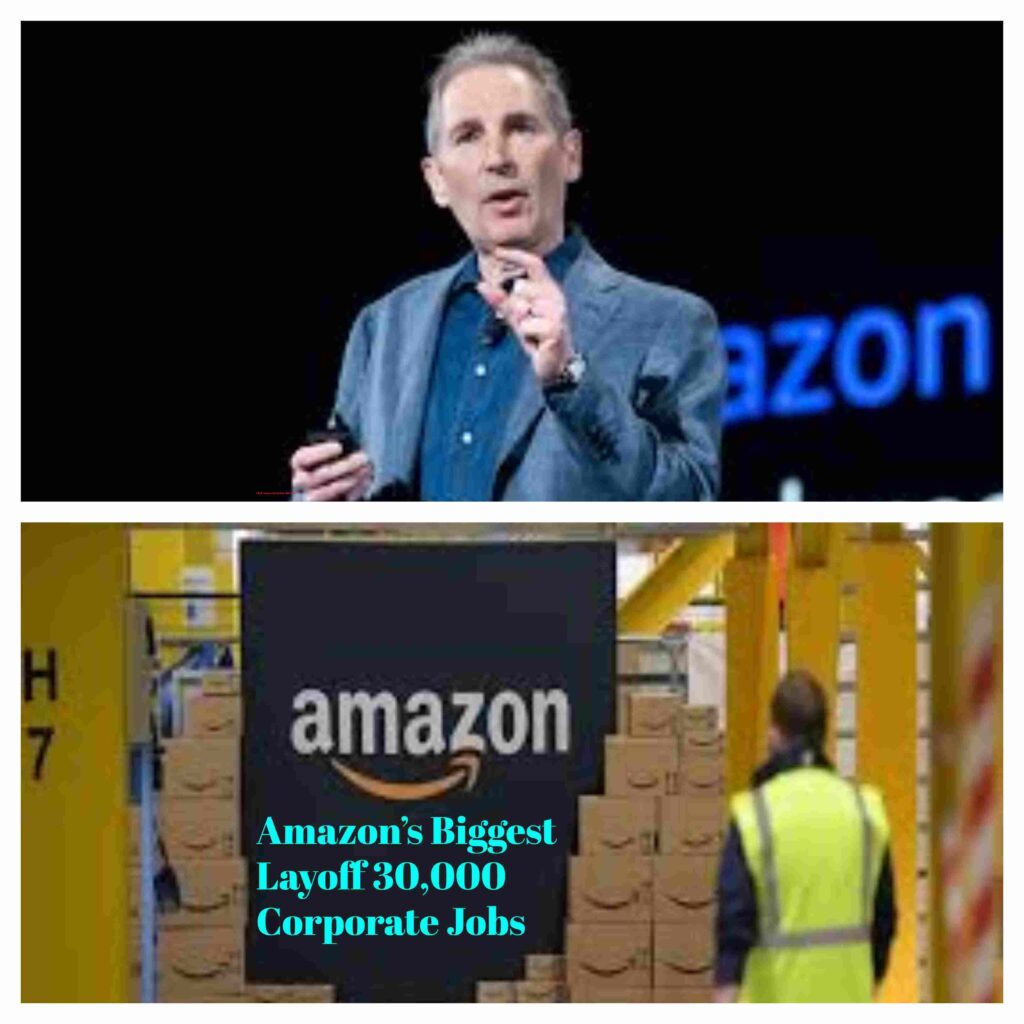
Amazon is preparing to lay off up to 30,000 corporate employees—its largest workforce reduction ever—as CEO Andy Jassy intensifies efforts to streamline operations, reduce costs, and embrace AI automation. The move affects nearly 10% of Amazon’s white-collar workforce and signals a dramatic shift in how the tech giant plans to operate in the post-pandemic era.
The Scale of the Layoff: A Corporate Earthquake
Amazon’s decision to cut 30,000 corporate roles marks a significant escalation from its previous layoffs of 27,000 employees between late 2022 and early 2023. While the company employs over 1.55 million people globally, the corporate workforce—comprising around 350,000 employees—is bearing the brunt of this restructuring.
Affected departments include:
- Human Resources (PXT)
- Devices and Services
- Operations and Logistics
- Communications and Podcasting
This sweeping layoff is not just a numbers game—it reflects Amazon’s evolving priorities in a rapidly changing tech landscape.
Why Is Amazon Cutting Jobs?
The layoffs are part of a broader strategy to cut costs, eliminate bureaucracy, and boost efficiency. According to reports, Amazon is responding to:
- Overexpansion during the pandemic: The company hired aggressively to meet surging demand, but now faces excess capacity.
- AI-driven automation: Many roles are being replaced or restructured due to advancements in artificial intelligence and machine learning.
- Corporate restructuring: Amazon is flattening its management layers to speed up decision-making and reduce redundancies.
CEO Andy Jassy has made it clear that Amazon must become leaner and more agile to stay competitive.
The Role of AI in Amazon’s Future
AI is at the heart of Amazon’s transformation. From warehouse robotics to customer service chatbots, the company is investing heavily in automation. The layoffs reflect a shift toward:
- AI-powered HR tools that reduce the need for manual recruitment and onboarding.
- Smart logistics systems that optimize delivery routes and inventory.
- Voice and vision AI in devices like Alexa and Echo, reducing human involvement in development and support.
As AI reshapes the workforce, Amazon is betting on technology to drive long-term growth—even if it means short-term pain for thousands of employees.
Impact on Departments: Who’s Most Affected?
Human Resources (PXT): Reports suggest up to 15% of HR roles could be eliminated. AI tools are replacing traditional HR functions like resume screening and employee engagement tracking.
Devices and Services: Teams working on Alexa, Echo, and Fire TV are facing cuts as Amazon reevaluates its consumer tech strategy. The company is focusing on profitable segments and scaling back experimental projects.
Operations: While warehouse jobs remain largely intact, corporate roles in logistics planning and supply chain management are being streamlined.
Communications and Podcasting: These divisions have seen gradual reductions over the past two years, and the trend continues as Amazon shifts focus to core business areas.
Employee Reaction: Uncertainty and Frustration
The announcement has sparked anxiety among Amazon employees, especially those in middle management and support roles. Internal forums are flooded with questions about severance packages, reassignments, and future job security.
Amazon has promised:
- Standard severance packages
- Access to career counseling
- Internal job placement support
However, many employees feel blindsided, especially after previous assurances that major layoffs were unlikely.
Business Implications: Leaner, Faster, Smarter?
Amazon’s restructuring aims to make the company more nimble and cost-effective. Analysts believe the move could:
- Improve profit margins in the face of rising operational costs.
- Enhance shareholder confidence, especially after mixed earnings reports.
- Position Amazon as a leader in AI-driven enterprise operations.
But there are risks. Morale may suffer, and the loss of experienced talent could impact innovation and customer service.
Seasonal Hiring vs. Corporate Cuts
Interestingly, while Amazon is cutting corporate jobs, it plans to hire 250,000 seasonal workers to handle holiday demand. This contrast highlights the company’s dual focus:
- Automate and streamline corporate functions
- Scale up frontline operations during peak seasons
It’s a balancing act between efficiency and responsiveness.
Global Context: Tech Industry Trends
Amazon’s layoffs are part of a broader trend in the tech industry. Companies like Meta, Google, and Microsoft have also announced job cuts in 2025, citing similar reasons:
- Post-pandemic recalibration
- AI integration
- Cost pressures
The tech sector is undergoing a structural shift, and Amazon’s move is emblematic of this transformation.
What’s Next for Amazon?
CEO Andy Jassy has outlined a roadmap focused on:
- AI innovation
- Cloud expansion via AWS
- Retail optimization
- Sustainability and ESG goals
The company is expected to invest more in generative AI, voice interfaces, and predictive analytics, reshaping how it interacts with customers and manages operations.
Final Thoughts: A Defining Moment for Amazon
Amazon’s decision to cut 30,000 corporate jobs is more than a cost-cutting measure—it’s a strategic pivot toward a tech-first, AI-powered future. While the layoffs are painful, they reflect the company’s commitment to staying ahead in a competitive global market.
For employees, it’s a time of uncertainty. For Amazon, it’s a chance to redefine its identity. And for the tech industry, it’s a signal that automation and efficiency are no longer optional—they’re essential.