Oppo Find X9 Pro launch date in India, Oppo Find X9 Pro price in India, Oppo Find X9 Pro vs OnePlus 15, Oppo Find X9 Pro Ultra, Oppo find x9 pro review, Oppo find x9 pro camera, OPPO Find X9 Pro Flipkart, Oppo Find X9 Pro 5G
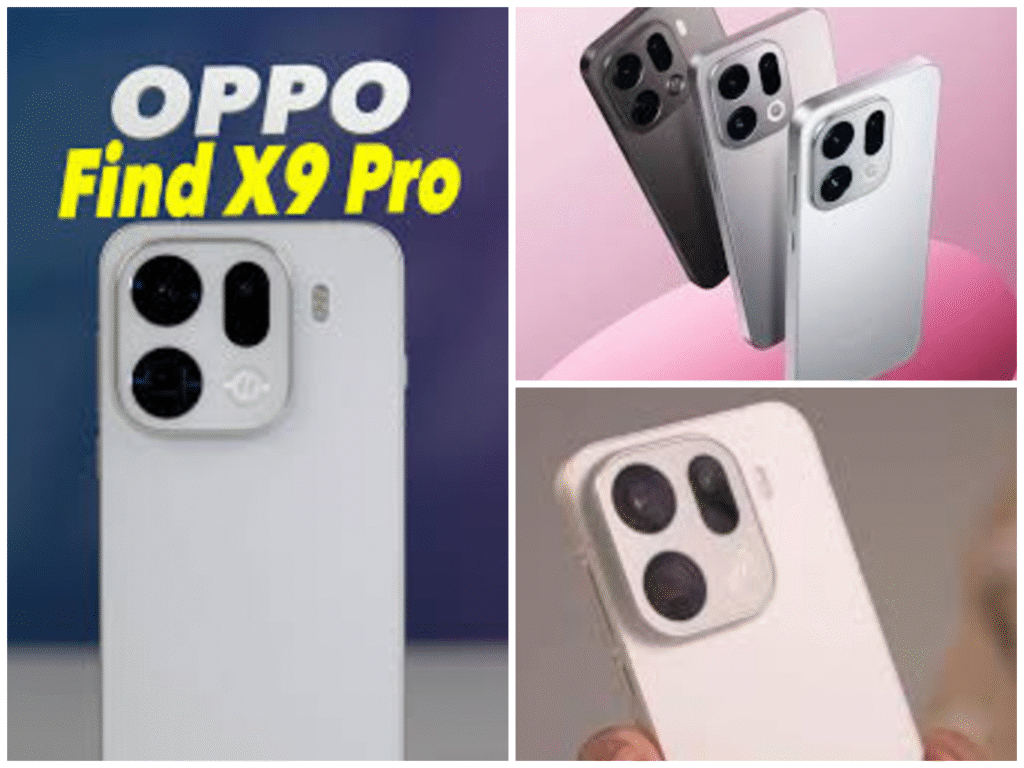
Meet the Oppo Find X9 Pro, the latest flagship from Oppo that takes the already excellent Find X8 Pro and gives it a major overhaul. At first glance you might wonder: the X9 Pro drops the dual periscope zoom of last year for a single periscope — so how is it way better? In this detailed first-impressions blog, we’ll explain exactly why that choice makes sense, and go through the design, display, performance, battery, cameras, software—and what to expect. This phone has launched globally and is expected to come to India soon.
Design – Premium Feel Meets Practical Improvements
The design of the Find X9 Pro is a smart evolution rather than a radical shift.
The phone is thicker and heavier compared to its predecessor (the Find X8 Pro), mainly because it houses a 27 % larger battery and a significantly larger camera module. These additions make sense given the specs, but in hand the phone still feels premium and manageable.
What stands out:
- The camera module is no longer the round unit from the X8 Pro, but a squarish rectilinear module at the top-left corner. This design change gives a more modern, purposeful look.
- The back glass flows into the module, with a metal “rail” around the camera bump, which gives added rigidity and visual quality.
- Flat front and back glass, flat metal frame edges — these choices improve grip and feel; many flagships go curved and while attractive, can suffer from light reflections or awkward hold.
- The handset includes IP66/IP68/IP69 dust & water resistance.
- The weight sits around 224 g, and the thickness is ~8.25 mm.
- Build materials are top tier; for example the front and back both get Corning Gorilla Glass Victus 2 protection.
In-hand feel: The phone feels robust, yet balanced. There’s minimal wobble when placed on a table, and the ergonomic grip is comfortable for one-hand use (though as with any ~6.7-inch flagship, you will use two hands often). The thickness is noticeable, but justified by the hardware inside.
One tiny gripe: the periscope portion inside the camera ring isn’t perfectly symmetrical — a small OCD point, but something some users will notice. However it doesn’t detract from the premium experience overall.
Verdict: Design is a clear upgrade, especially if you care about build quality, durability, and a refreshed aesthetic.
Display & Multimedia Experience
Next up: what you see and what you hear. The display on the Find X9 Pro is a standout.
Display Highlights
- The panel is a 6.78-inch LTPO AMOLED, capable of refreshing from 1 Hz up to 120 Hz.
- Resolution sits at ~1272 × 2772 or thereabouts (1.5K class).
- Peak brightness ~3,600 nits.
- Ultra-high frequency PWM dimming (2,160 Hz according to some sources) and DC dimming supported — good for low-light / night usage.
- Flat panel design now (instead of quad-curved on previous models) — reduces edge reflections and improves practicality.
- HDR10+ and Dolby Vision support along with 10-bit colour depth.
Multimedia & User Experience
- Stereo speakers present — sound is clean and detailed, though not the loudest in class (as early impressions indicate).
- The in-display ultrasonic fingerprint scanner is fast, reliable, and works even with moist fingers in many cases.
- Haptic feedback tuning is excellent (a hallmark of Oppo’s recent flagships).
- Flat display + minimal bezels = excellent immersiveness with minimal distractions.
Verdict: The display is among the best in class for viewing, media consumption and everyday use. It ticks nearly all boxes you’d expect in 2025 flagship territory.
3. Performance & Under-the-Hood
Now let’s dig into the hardware that powers the phone—because high specs only matter if they’re well implemented.
Chipset & Memory
- Under the hood: the 3 nm MediaTek Dimensity 9500 chipset.
- Up to 16-16 GB RAM + high-speed storage (UFS 4.1) depending on configuration.
- Cooling: vapour chamber plus a large dissipation area which helps manage thermals.
Real-World Performance
- On benchmarks: single-core & multi-core scores are impressive but not class-leading in the CPU department; however the GPU (Arm G1 Ultra) is very strong.
- Gaming: In tests (e.g., playing Genshin Impact at 60 fps for 30 minutes) the phone held steady frame-rates and showed strong thermal control.
- Oppo’s performance tuning is conservative — meaning less aggressive clocking compared to some rivals, which aids stability and longevity.
Battery & Charging
Battery life is arguably one of the strongest chapters in this phone’s story.
Battery Specs
- A massive 7,500 mAh silicon-carbon battery for the Pro model.
- Wired charging: 80 W SuperVOOC.
- Wireless charging: 50 W, plus 10 W reverse wireless charging.
What users are saying
- Early reports note multi-day usage is quite feasible.
- Optimised efficiency thanks to chip + battery tech + software tuning.
Practical expectations
- For moderate to heavy users: you’re likely looking at a full day of usage comfortably, and potentially even day-and-a-half depending on settings (refresh rate, display usage).
- For lighter users: two days is plausible.
- Charging: 80 W wired means quick top-ups. 50 W wireless is not the fastest compared to some rivals (~100W), but still very good for wireless.
- Reverse wireless is a handy bonus (great for earbuds, accessories).
- Given the large battery and efficient hardware, long-term battery health (less degradation) looks promising.
Verdict: If battery longevity matters to you (travel, heavy usage, streaming, gaming), this is one of the best choices right now.
Cameras – The Big Story
This is where the Find X9 Pro really wants to shine. The camera system has been overhauled and re-imagined for 2025 flagship level.
Sensor & Lens Highlights
- Main camera: 50 MP Sony LYT-828 sensor, 1/1.28″ size, f/1.5, OIS.
- Ultra-wide: 50 MP Samsung JN5 sensor, f/2.0, 15mm equivalent.
- Telephoto (periscope): 200 MP (Samsung HP5 or equivalent), 70mm equivalent, f/2.1, OIS.
- Front: 50 MP selfie camera, auto-focus.
- The system is co-developed with Hasselblad (Hasselblad tuned) and includes a “True Colour Camera” to ensure accurate colours across lighting conditions.
What this means for real-world photography
- The 200 MP telephoto sensor allows lossless-quality zooms up to ~13.2x (via crop + optical) and super high resolution to crop later.
- Tele-macro capability: the periscope module can focus as near as ~10 cm for close-up shots from distance.
- Excellent for portrait mode thanks to large sensors + lens + tuning.
- 4K/120 fps capture, LOG video support, Dolby Vision video — this is creator-grade mobile video.
- Adaptive resolution: the camera app may output 26MP, 15MP, or 12MP depending on lighting and lens, to optimise quality — sometimes surprising but beneficial.
- Macro mode is significantly improved; ultra-wide + macro combine to give very strong close-up options.
- AI extensions & software tuning (via LUMO Engine) help reduce noise, improve dynamic range, deliver better low-light results.
Realistic trade-offs
- While telephoto is very strong, long ultra-zooming (e.g., 60x digital) still isn’t perfect; you’ll see typical smartphone limitations.
- Large resolution images will consume substantial storage space, especially if shooting at 200 MP or in high-res modes.
- Software tuning (HDR, colour) may be more aggressive than some users prefer — e.g., boosted highlights vs natural look.
- The physical size & weight of the camera module might reflect in slight camera bump or balance in hand.
Comparison to previous model (Find X8 Pro)
- The X8 Pro had dual periscope lenses; here the shift to a single, much larger 200 MP periscope is a deliberate design trade-off for greater impact, better sensor size, and more refined optics.
- Expect substantial improvement in zoom clarity, overall sensor performance, and high-resolution flexibility.
Verdict: If photography (especially telephoto / zoom / creator video) is a priority for you, this is one of the best smartphones you can currently buy. The updates are meaningful, not incremental.
Software & Features
Hardware is only half the story—software determines how smoothly and pleasantly you use the phone.
OS & Custom skin
- Ships with Android 16 with ColorOS 16 on top.
- Oppo promises a smooth, highly-optimised experience: animations are fluid, app transitions feel premium.
- Some standout features:
- Full-screen Always-On Display (AOD) with customisation.
- Flux Themes 2.0: many theme options + customisable text/apps.
- AI Writer integration system-wide (good for messaging, email).
- MindSpace: A dedicated space to organise memories, voice recordings, screen grabs — integrated with Google Gemini AI.
- Quick button & Snap Key: hardware shortcuts (one for capturing screenshots or voice recordings, double press for MindSpace).
Additional perks
- Connectivity: Wi-Fi 7, Bluetooth 6.0, 5G SA/NSA – all checkboxes for a 2025-flagship.
- Security: In-display fingerprint, face unlock, and IP ratings as noted earlier.
Minor caveats
- Pre-installed third-party apps and some “hot apps/games” shortcuts might appear on the home screen; you can remove them, but some users consider this bloat.
- While animations and feel are top-tier, if you prefer ultra-minimal OS skins (e.g., pure Android), you might find the theming layers a little heavy.
- Long-term update promise: check Oppo’s update policy in your region before purchase (they’ve said 5 OS upgrades + 6 years of security updates in certain markets).
Conclusion
In a smartphone world where many flagships feel very similar, the Oppo Find X9 Pro stands out by making meaningful design and spec upgrades. The shift from dual to single periscope zoom isn’t a downgrade—it’s a strategic move toward a larger, better-optimized sensor and lens system that delivers more real-world value. Combine that with a huge battery, premium build, flagship display, and advanced AI/software features—and you have one of the most compelling Android phones of 2025.